

How to Use EVOO:
Smoke Point, Cooking,
Storage & Daily Dose
EVOO smoke point sits between 375–410°F (190–210°C) — safe for sautéing, roasting, and pan-frying. This guide covers every use case: cooking, finishing, drizzling, storage, and how much to use daily, from a producer who presses 629 mg/kg polyphenol EVOO in Molochio, Calabria, Southern Italy.
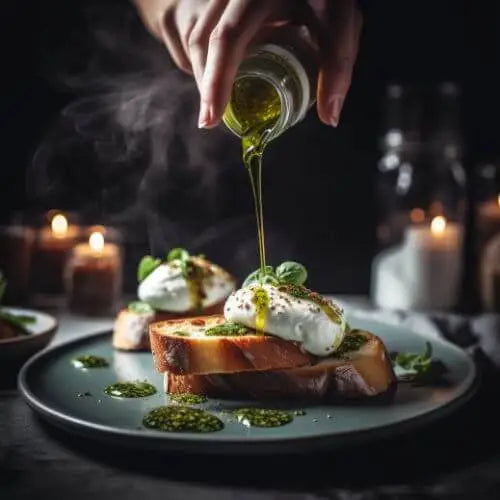
EVOO stands for extra virgin olive oil — the highest grade of olive oil, cold-pressed without heat or chemical solvents. It retains the full natural flavor, aroma, and polyphenol content of the olive. In a recipe, "EVOO" always means the same thing: unrefined, first cold press, acidity ≤0.8% free oleic acid.
In practical kitchen terms, EVOO works for four distinct uses: cooking (heat applied), finishing and drizzling (added off-heat as a final touch), pairing (used raw as a dip or condiment), and daily dosing (a measured intake for health purposes). Each use has a different logic — this guide covers all four, plus how to store EVOO correctly to preserve what you paid for.
EVOO Smoke Point: 375–410°F (190–210°C)
The smoke point of high-quality EVOO sits between 375–410°F (190–210°C) — well above typical sautéing and roasting temperatures. The concern that "EVOO burns and becomes toxic" is a persistent myth. Published research (Australian Oils Research Laboratory, 2018) found EVOO outperforms most refined oils in oxidative stability when heated.
What determines smoke point? The main factor is free fatty acid (FFA) content — not oil grade. A fresh, low-acidity EVOO (like Deliba at 0.15% FFA) has a higher smoke point than an older, oxidized "pure olive oil" at higher acidity. Polyphenols act as natural antioxidants that slow degradation under heat.
Smoke point values vary by freshness, FFA content, and brand. USDA FoodData Central / published literature.
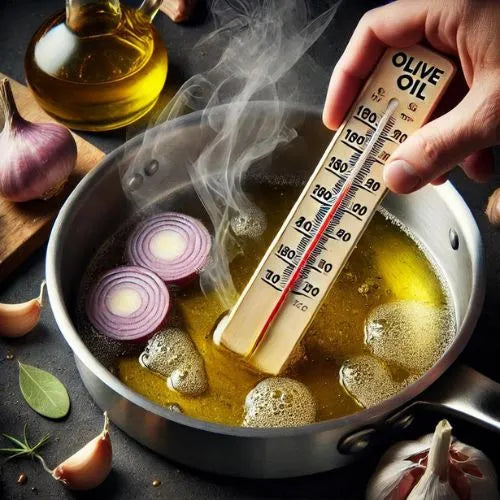
Cooking with Extra Virgin Olive Oil
EVOO is the default cooking oil in the Italian kitchen — not a luxury saved for finishing. Sautéing onions, garlic, peppers, and zucchini; roasting fish and chicken; pan-frying cutlets. This is how Southern Italian households have cooked for centuries.
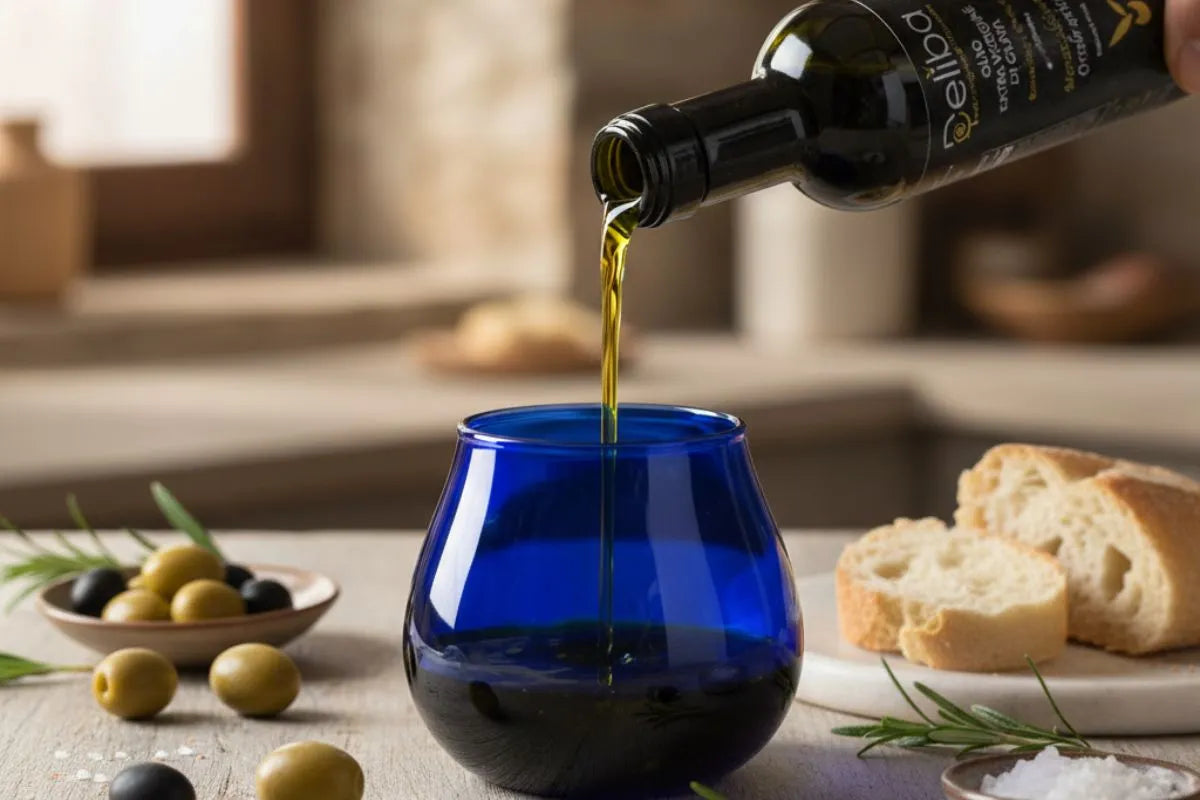
Finishing and Drizzling: The Most Important Use of High-Polyphenol EVOO
Finishing — adding EVOO raw, off-heat, as the final touch before serving — is where high-polyphenol oil makes the biggest difference. Heat degrades polyphenols. A raw drizzle delivers the full 629 mg/kg, the peppery throat finish (oleocanthal at 85 mg/kg), and the fresh aroma that disappears with cooking.
Finishing vs drizzling: one distinction worth making. Finishing means adding oil to a hot dish immediately off the heat — soups, pasta, grilled fish — where the residual warmth opens up the aroma without degrading it. Drizzling is the lighter hand applied to cold dishes, raw preparations, or plated food at room temperature: salads, bruschetta, cheese, sliced tomatoes. Both are raw uses. Both preserve the full polyphenol content. The technique and pour volume differ.
This is also the most efficient path to the EFSA health claim threshold: 20g daily of raw high-polyphenol EVOO. One generous drizzle at the end of lunch and dinner covers it.
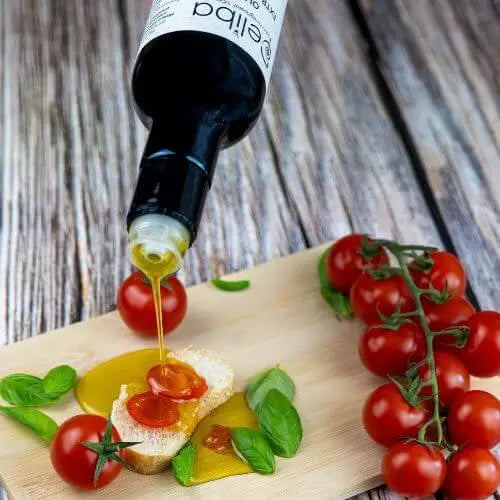
Pairing: Bread, Cheese & Vegetables
Used raw as a dip or condiment, EVOO is a standalone food experience — not a background ingredient. A Calabrian producer's table: rustic bread, a small dish of EVOO with flaky salt, fresh or aged cheese, charred vegetables. This is the simplest way to taste what 629 mg/kg actually means on the palate.

How to Store Olive Oil to Protect the Polyphenols
EVOO is a fresh-pressed fruit juice. The same conditions that degrade fresh produce — light, heat, oxygen, time — degrade olive oil. The difference is that degradation in olive oil is invisible: the oil looks identical when it's fresh at 629 mg/kg and when it's dropped to half that value six months later. The only way to know is a lab test or to taste carefully.
The three enemies of EVOO are light, heat, and air. Each one accelerates oxidation — the chemical process that breaks down polyphenols and turns fresh, peppery oil into something flat, oily, and eventually rancid. If you paid for 629 mg/kg, storage is the only way to still be getting 629 mg/kg at the table. For a deeper dive into containers, formats, and shelf life, see the complete EVOO storage guide →
How Much EVOO Per Day: The Evidence-Based Answer
The EFSA-authorized health claim for olive oil polyphenols is based on consuming 20g daily — approximately 1.5 tablespoons — of a qualifying high-polyphenol EVOO (minimum 250 mg/kg polyphenols). This threshold is the minimum required to trigger the documented effect on LDL oxidation protection. Deliba Ottobratico at 629 mg/kg exceeds that threshold by a factor of 2.5.
The most important detail: the 20g should be consumed raw — as a finishing drizzle or in a salad dressing — not exclusively through cooking. Heat reduces polyphenol availability. Cooked EVOO still contributes, but the EFSA claim is specifically calibrated around raw consumption.
In practice, reaching 20g daily is straightforward if EVOO is part of your normal cooking routine. The approach used in Southern Italian households — and by the centenarians of Molochio — is not measured doses. It's EVOO as the default fat at every meal: cooking, finishing, and dipping. The dose takes care of itself. For the science behind polyphenols and health, see the nutrition and health benefits guide →
Can You Substitute EVOO for Vegetable Oil?
Yes — in most cases, EVOO is a direct 1:1 substitute for vegetable oil in cooking and baking. The flavour profile changes (EVOO adds fruitiness and slight bitterness), but the chemistry works. Vegetable oil is refined, neutral, and stripped of all nutritional value beyond fat calories. EVOO retains polyphenols, vitamin E, and the full flavour of the olive.
Everyday Hacks to Use More EVOO
The EFSA-authorized health benefit requires 20g daily (about 1.5 tablespoons) of a qualifying high-polyphenol EVOO. The easiest way to reach it: build EVOO into your default routine rather than treating it as an occasional condiment.


Download Our Free EVOO Recipe Book
15 easy Mediterranean recipes showing how to use extra virgin olive oil for cooking, finishing, and pairing. Get the PDF in your inbox and start cooking tonight.
Frequently Asked Questions
Continue learning
The EVOO That Actually Burns.
629 mg/kg. Lab-Certified.
Deliba Ottobratico 2025/26 from Molochio, Calabria, Southern Italy. The peppery throat finish is oleocanthal — 85 mg/kg of it. Cold Extracted within 4 hours of harvest. Independent lab certified.