

Look for the month and year of harvest, not only a best-before date.
Lab-tested · Single-estate · Calabria
High-polyphenol extra virgin olive oil.
Polyphenol content is a laboratory measurement, not something that can be confirmed from a marketing phrase alone. Deliba publishes the current harvest, lot number and independent laboratory report before purchase.
Current Deliba harvest: Ottobratico contains 629 mg/kg total polyphenols and Sinopolese contains 609 mg/kg, according to the published laboratory report.

629 mg/kgOttobratico · October 2025
609 mg/kgSinopolese · November 2025
What to verify
Look beyond the number.
A useful polyphenol figure should identify the oil that was tested and give the customer access to the underlying evidence.
The lot shown on the bottle should correspond to the oil described in the report.
The complete laboratory document should be available, not just a promotional graphic.
Cultivar, producer and place of origin should be clearly identified.
Choose your oil
 Start here
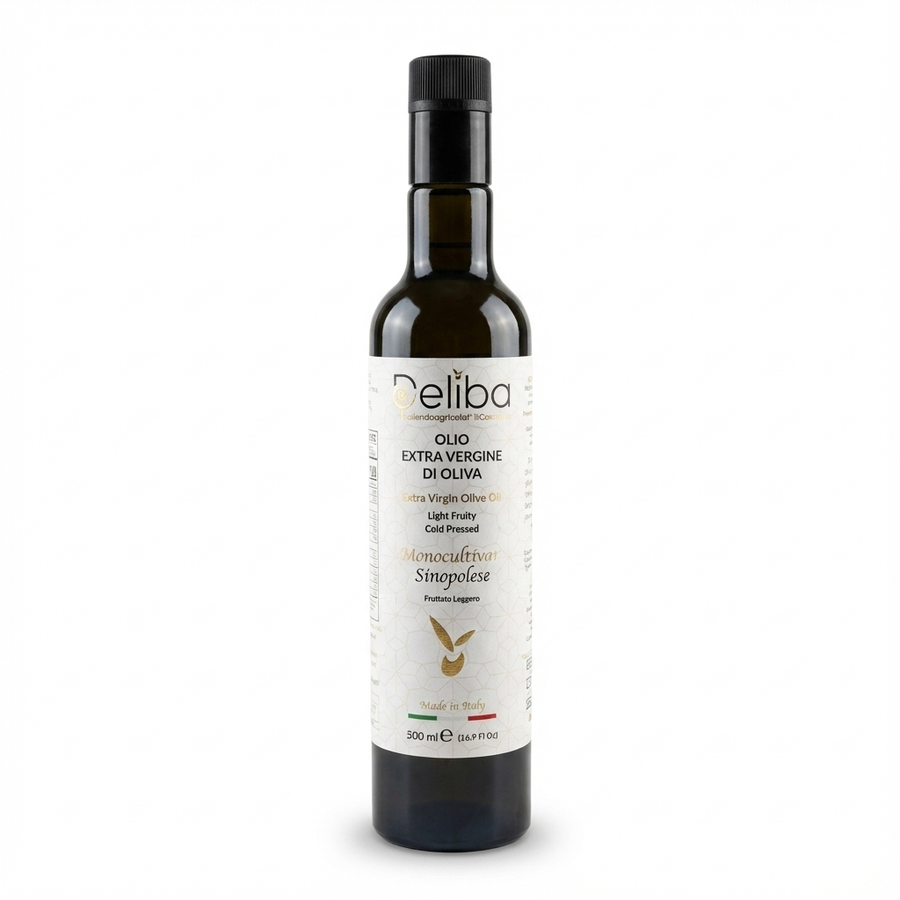
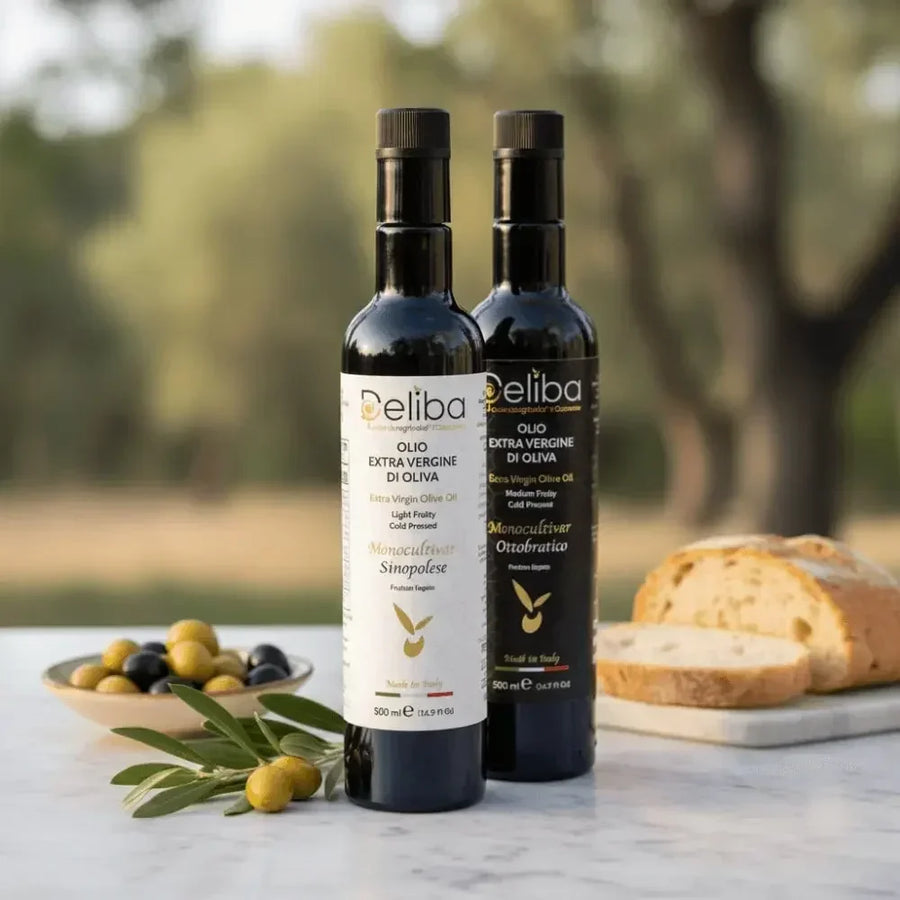
Two cultivars. One family estate.
Choose Ottobratico for a more pronounced peppery finish, Sinopolese for a gentler everyday profile, or compare both in the Duo.
Free standard U.S. shipping is included with every 4-bottle and 6-bottle box.
 Start here
629 mg/kg · October 2025 · Lot 1 25 O 2
Ottobratico
Medium fruity, with balanced bitterness and a distinct peppery finish. Suitable for raw use, finishing and everyday cooking.
View Ottobratico
609 mg/kg · November 2025 · Lot 1 25 S 1
Sinopolese
Light fruity, smooth and versatile, with a gentler finish. Made for everyday cooking, sauces, roasting and raw use.
View Sinopolese
Both cultivars · Two 500 ml bottles
The Duo
One Ottobratico and one Sinopolese in the two-bottle format, so you can compare their aromas, intensity and culinary uses.
View the Duo
Independent evidence
Read the report before you buy.
Deliba publishes the analytical document for the current oils so the stated polyphenol values, acidity and other measured parameters can be checked directly.
629mg/kg total polyphenols
Ottobratico
Ottobratico
609mg/kg total polyphenols
Sinopolese
Sinopolese
OttobraticoOctober 2025 · Lot 1 25 O 2 · Cert. 37823
SinopoleseNovember 2025 · Lot 1 25 S 1 · Cert. 37839
OriginCosmano family estate · Molochio, Calabria, Southern Italy
PackagingBottled and sealed in Italy · Dark glass · 500 ml
Frequently asked questions
Clear answers, verifiable facts.
Which Deliba olive oil has the highest polyphenol count?
Ottobratico has the highest current measured value at 629 mg/kg total polyphenols. Sinopolese was measured at 609 mg/kg; both figures appear in Deliba’s public laboratory report.
What should I check when buying high-polyphenol olive oil?
Check the harvest month and year, the specific lot, the laboratory name and the complete report. The data should describe the current oil being sold, rather than an older harvest or a generic brand statement.
What is the difference between Ottobratico and Sinopolese?
Ottobratico is medium fruity with a more distinct peppery finish. Sinopolese is light fruity and gentler. Both are monovarietal oils from the same family estate in Molochio, Calabria, Southern Italy.
Can I cook with these oils?
Yes. Both are extra virgin olive oils intended as food and can be used raw or in everyday cooking. Ottobratico has a more pronounced finish; Sinopolese has a gentler profile.
Where are Deliba oils produced and shipped from?
The oils are produced, bottled and sealed in Molochio, Calabria, Southern Italy. U.S. orders ship domestically from Deliba’s New Jersey inventory, with no customs payment required at delivery.
Where can I see the laboratory certificate?
The complete current report is publicly available before purchase on the Deliba website. Open the laboratory report →
Current harvest · Public evidence
Choose by taste. Verify by certificate.
Start with Ottobratico, choose the gentler Sinopolese, or taste both cultivars side by side in the Duo.